A playable idea from a prompt
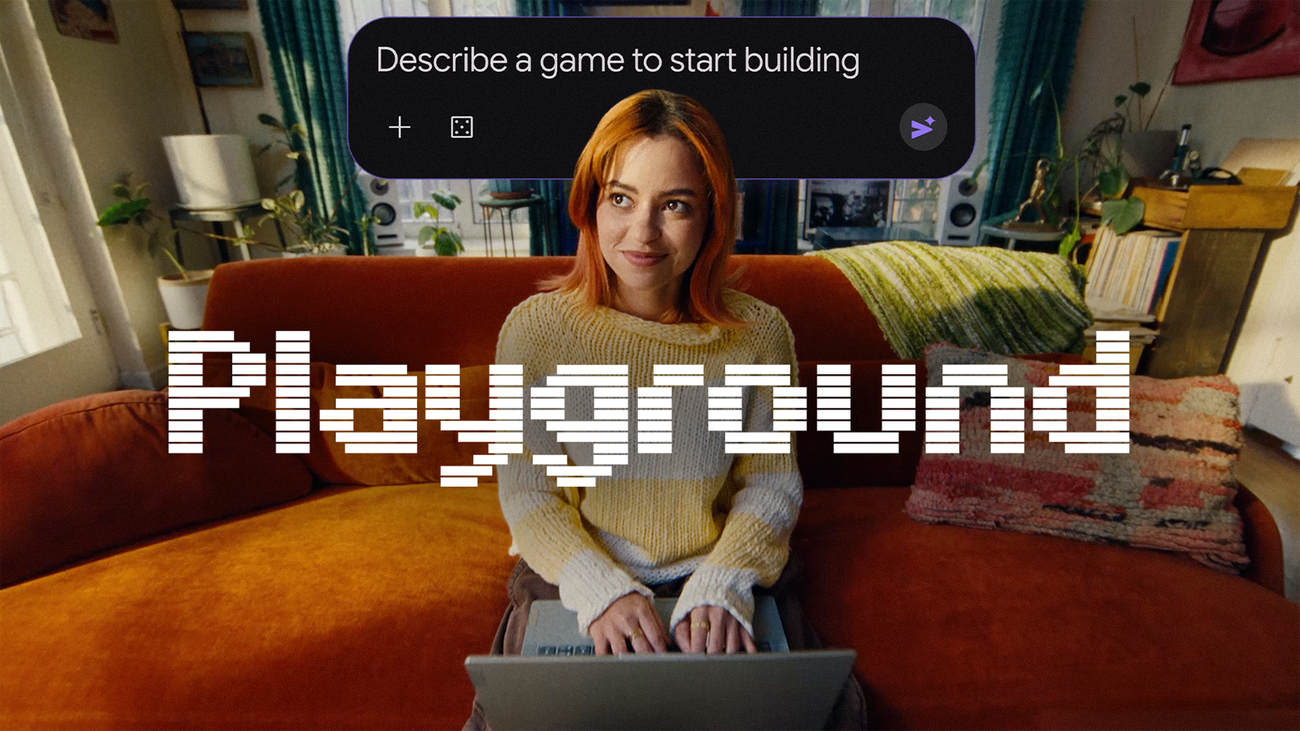
Google launched Playground in the United States on October 7 as an experimental platform for creating browser games through natural-language instructions. Users can begin with a blank canvas or starter prompt, test the resulting game and request changes to its rules, physics, characters or environment without editing code directly.
The service also acts as a distribution layer. Creators can keep projects private, share an unlisted link or submit them to a public gallery. Google says Playground supports leaderboards and both turn-based and real-time multiplayer, although multiplayer remains in early preview and does not support global leaderboards.
Access is narrower than the headline promise suggests. Playground is currently limited to U.S. users aged 18 or older. Anyone eligible can play published games, but creation access is rolling out in phases. Google offers a limited free allowance refreshed weekly, while subscribers to Google One AI plans receive higher limits; the company’s help center says a subscription can also provide immediate creation access.
A platform, not just a generator
The larger bet is that prompt-based creation can feed a community marketplace. Public games are ranked partly through ratings and play activity, while Play Games profiles provide handles, follows and competitive features. Google says every publicly listed game undergoes automated safety screening before discovery, with user reporting available afterward.
That system introduces unresolved questions. Automated review does not establish that generated games will be original, balanced, secure or consistently enjoyable. Google has not published comparative quality data, retention figures or evidence that inexperienced creators can maintain complex projects. Its announcement is a product demonstration and launch description, not independent validation of those outcomes.
Creators can download a project’s HTML, JavaScript, CSS and generated assets as a ZIP file, according to Google’s help center. That export option could matter if Playground evolves beyond a closed destination, although the practical portability and maintainability of generated projects remain untested here.
Unity is the intended next step
Google and Unity also announced Unity Spark, an expanded creation experience planned for later in 2026. The companies say it will add higher-fidelity 3D capabilities, more advanced mechanics and access to the Unity runtime. Spark is still in testing, with a closed beta expected before broader availability, so those capabilities should be treated as a roadmap rather than part of today’s Playground product.
The Future AI view
Playground’s consequential idea is not simply that AI can output a small game. It is that generation, revision, publishing, identity, discovery and monetized creation limits can be assembled into one consumer platform.
That integration could move game development closer to social posting: describe an idea, refine it conversationally and publish it into an algorithmic feed. The hard problem then shifts from producing code to governing abundance. If playable software becomes cheap to generate, originality, moderation, dependable mechanics and creator control become more valuable—not less. Playground will be worth watching for whether it develops those systems, not merely whether its first prompts produce entertaining demos.
Sources & further reading
Google announcement · October 7, 2026 Google Playground Help Center Unity partnership announcement · October 7, 2026Reported facts are drawn from the linked sources. The Future AI view is our interpretation. Company demonstrations and benchmarks are attributed; no independent product test is claimed.
Prepared with AI assistance for the Elias Marrow byline. Send a correction.