What NVIDIA showed
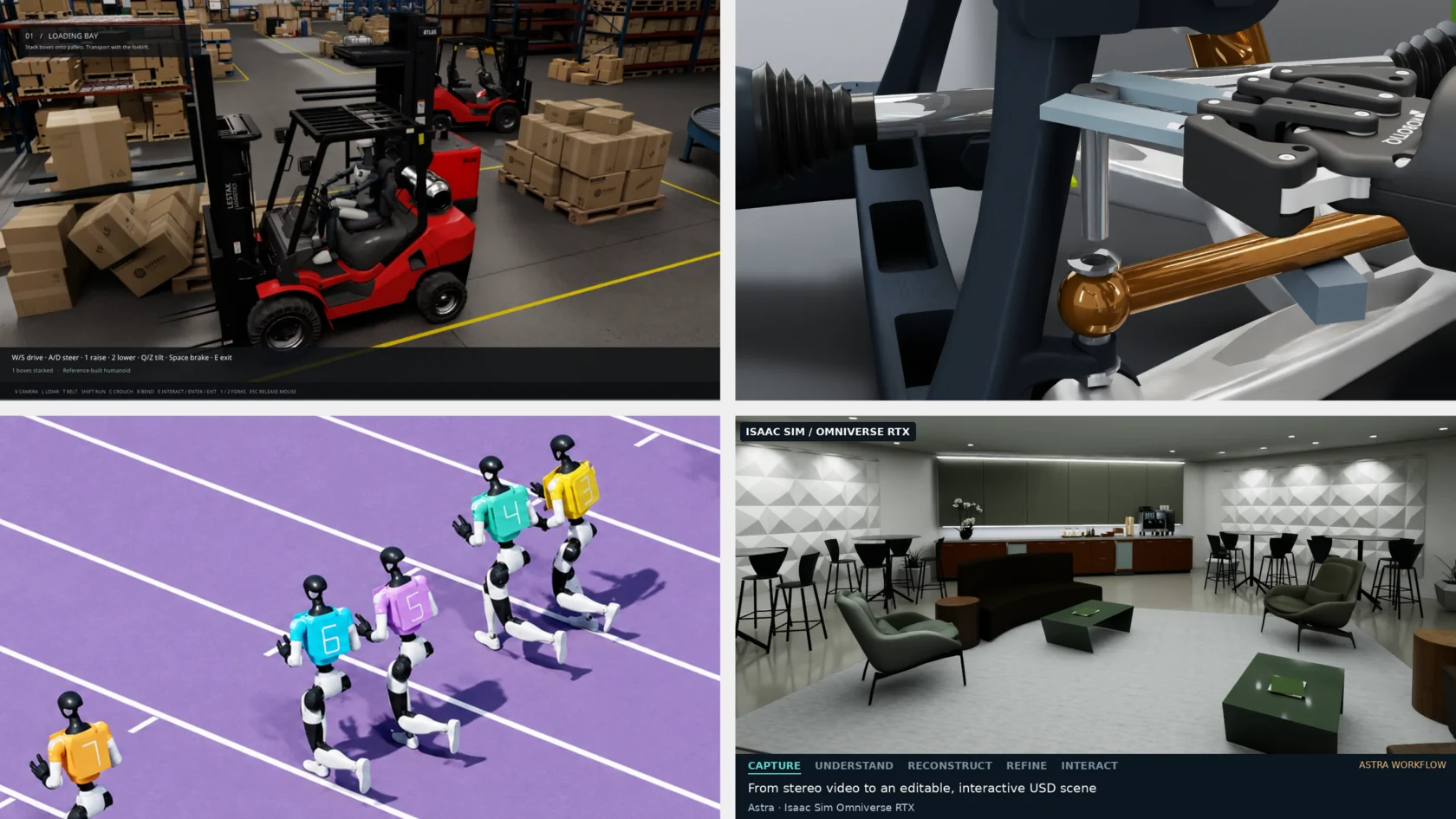
NVIDIA published a set of agent-assisted simulation projects on October 8. The examples combine frontier AI models with Omniverse libraries for physics, rendering, scene management, and interfaces. They include a humanoid warehouse simulator, an autonomous-driving testing environment, digital-twin refinement, and experimental robot movements. Developers provide instructions, review results, and direct revisions.
The feedback loop
In a digital-twin example, NVIDIA describes agents comparing simulated camera and lidar outputs with recorded data, then changing scenes in response to measured differences. Other demonstrations connect controllers to physics trials or turn captured rooms into editable environments. These are projects described by NVIDIA, with demonstrations available at the original source. They do not establish that an agent can deploy a safe physical robot without further engineering and validation.
The Future AI view
The useful part of a simulation is its resistance to a good-looking story. A controller has to survive the constraints the environment imposes. A scene has to match measurements closely enough for its intended purpose. My interest is in the loop between generation and correction: what was measured, what failed, and what changed? A smooth video can hide those questions. A strong technical account should make them easier to answer. Watch for the boundary between an agent assembling an application and the evidence needed to trust the resulting behavior outside that application.
Sources & further reading
NVIDIA demonstrations · October 8, 2026Reported facts are drawn from the linked sources. The Future AI view is our interpretation. Company demonstrations and benchmarks are attributed; no independent product test is claimed.
Prepared with AI assistance for the Elias Marrow byline. Send a correction.
NVIDIA humanoid warehouse simulation demonstration
NVIDIA’s new demonstrations connect frontier agents to Omniverse libraries for robots, digital twins, and driving simulations—with people directing the work.
Read our view